
Oxygen Absorber Size Chart
This chart restates conservative starting container volumes published with the OxySorb range supplied in Australia by Wholesale Group. It is a first estimate, not a specification for every pack.
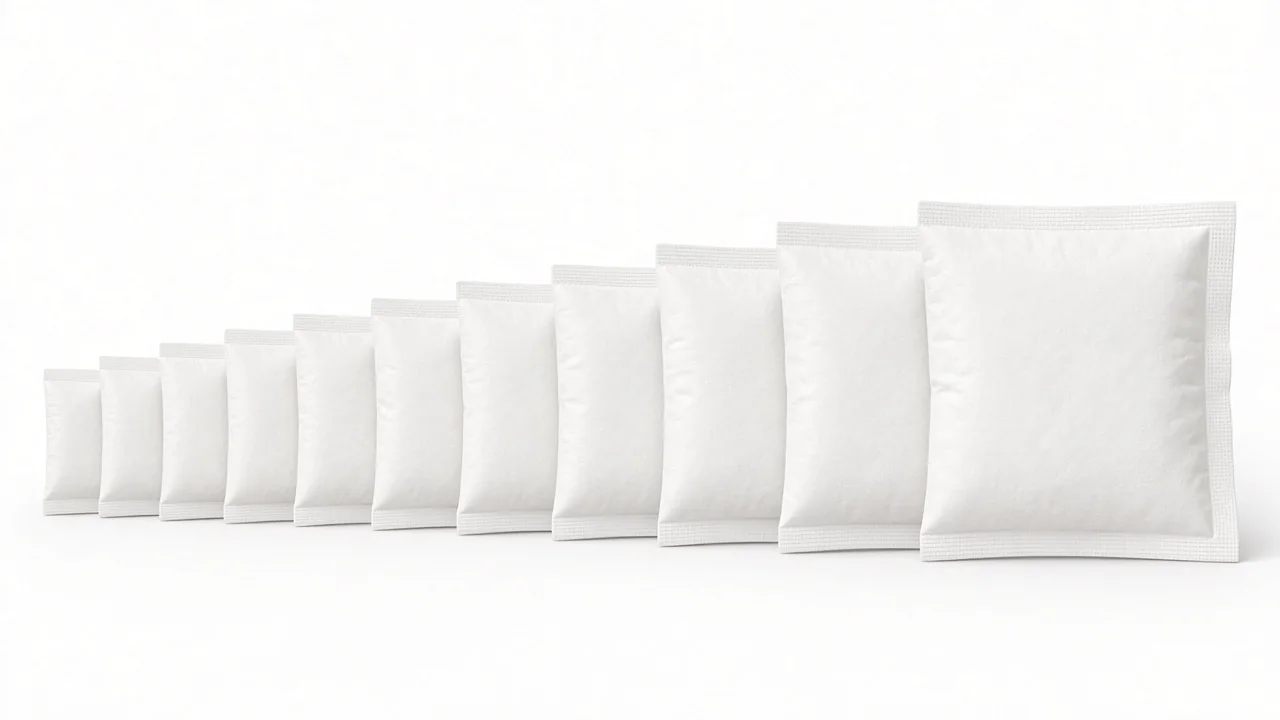
| Sachet capacity | Conservative starting container volume | Typical starting uses |
|---|---|---|
| 20 cc | Up to 80 mL | Tiny barrier pouches, tea portions, small servings of dried herbs |
| 30 cc | Up to 120 mL | Small snack pouches or miniature jars |
| 50 cc | Up to 200 mL | Compact jars and resealable barrier pouches |
| 100 cc | Up to 400 mL | Small Mylar bags; dried fruit, rice or milk powder portions |
| 200 cc | Up to 800 mL | Pantry jars and medium bags; flour, grains or dried beans |
| 300 cc | Up to 1.2 litres | One-litre jars and larger pouches; rice or oats |
| 400 cc | Up to 1.6 litres | Larger retail packs; nuts, dried fruit or flour |
| 500 cc | Up to 2 litres | Large Mylar bags; rice, pasta or dry pet food |
| 1000 cc | Up to 4 litres | Bulk Mylar or lined containers; grain, flour, dried beans |
| 2000 cc | Up to 8 litres | Larger bulk bags and barrier-lined pails |
Return to the size guide for the 250 cc-per-litre rule, or read the sizing notes before packing. To order these sizes, use Wholesale Group’s OxySorb pages.